


Elise Lauriot Prevost, Conflict Business and International Crimes Hub Lead
Twice a day, ships leave the Shannon Estuary carrying alumina from Europe’s largest refinery, a Russian-owned operation in Ireland, bound for smelters in Russia. Those smelters, co-owned by the oligarch Oleg Deripaska, who is sanctioned by the EU, help supply the factories, which are also sanctioned, producing Iskander missiles, T-72 tanks and Sukhoi aircraft engines being used in Russia’s war against Ukraine. Alumina is the indispensable raw material for producing aluminium, and the Irish Aughinish refinery, owned by Rusal, has become essential to Russia. While exports of refined aluminium to Russia are strictly banned under EU sanctions, its precursor alumina has escaped scrutiny. Far from winding down, the trade has grown markedly since the full-scale invasion began, with Russia becoming Ireland’s largest alumina export market. At Aughinish, exports to Russia rose by roughly 55 per cent in value between 2022 and 2024, and by the first quarter of 2026 more than 80 per cent of the plant’s alumina was being shipped to Russian smelters. The aluminium produced there is in turn sold, through an intermediary trader, to dozens of sanctioned Russian arms manufacturers.
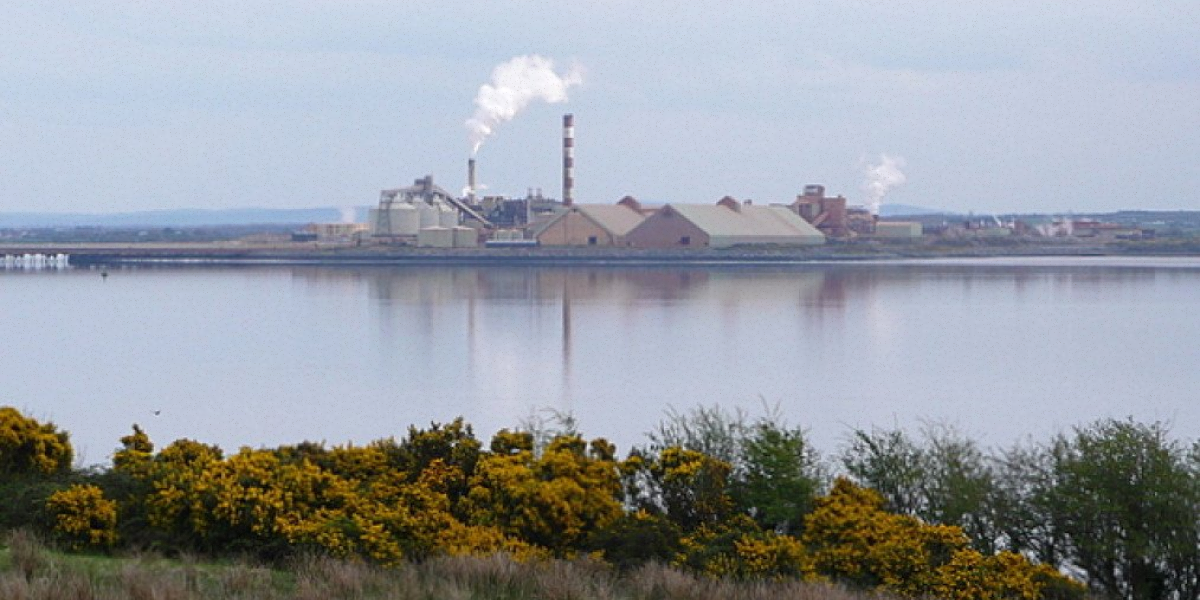
Aughinish Alumina (Source: Wikipedia)
The company argues that no one can prove a particular shipment from Ireland ends up in a particular weapon. In a narrow sense, that is true. Smelters mix feedstock from multiple sources, and there is no public paper trail tracing a cargo from Limerick to the battlefield. For its part, the Irish government has so far largely avoided taking a definitive position, instead pointing to an ongoing investigation into the refinery’s operations and potential links to Russia.
But the absence of a direct chain of custody is not the same as the absence of responsibility.
The UN Guiding Principles on Business and Human Rights call for heightened, conflict-sensitive due diligence in war-affected environments. The question is not whether a company can rule out every possible connection to harm. It is whether its activities cause, contribute to, or are directly linked to that harm, and whether it has used whatever leverage it has to prevent it.
International criminal law approaches the issue in a similar way. Liability for aiding and abetting can arise where practical assistance has a substantial effect on the commission of crimes and where those providing it know, or are aware, of how it will be used. For senior decision-makers who continue to facilitate these supply chains, that standard is difficult to ignore and could lead to prosecution.
Crucially, both the company itself and the people who direct it could be held liable. The Lafarge case in France illustrates that company directors can be sentenced to prison over payments made to a terror organisation. Their trial for complicity in crimes against humanity committed by the Islamic State in Syria is pending. This case is not a one-off, as is demonstrated by the former directors of Lundin Energy currently standing trial in Sweden for complicity in crimes against humanity during Sudan’s civil war.
At the level of the state, Ireland carries its own obligations. Under Common Article 1 of the Geneva Conventions, states must ensure respect for international humanitarian law. Under the International Law Commission’s Articles on State Responsibility, Article 16 holds that a state which knowingly aids or assists another state’s internationally wrongful acts may itself bear responsibility and Article 41(2) requires states not to aid or assist in maintaining situations created by serious breaches of peremptory norms, such as Russia’s aggression against Ukraine.
Across these different legal frameworks, the central questions remain remarkably consistent: what contribution to likely crimes did the supply make; what could the supplier have known and what did they do in response?
That is the territory explored by Global Rights Compliance’s Business, Conflict and International Crimes Hub, where commercial supply chains intersect with atrocity risks. The real issue is not whether Ireland can prove that its alumina does not end up inside a specific Russian weapon or shell. It is whether a state that allows a sanctioned Russian oligarch’s company to ship increasing volumes, to destination saturated in criminal conduct and in full view of the war, can credibly claim ignorance.